A fan adaptation applying Salubrious Snail's published Commander principles to the Wakanda precon. Not authored or endorsed by Salubrious Snail. Card text from Scryfall.
Cuts and adds below follow the Draftsim Wakanda Forever upgrade guide; every card identity here is verified on Scryfall.
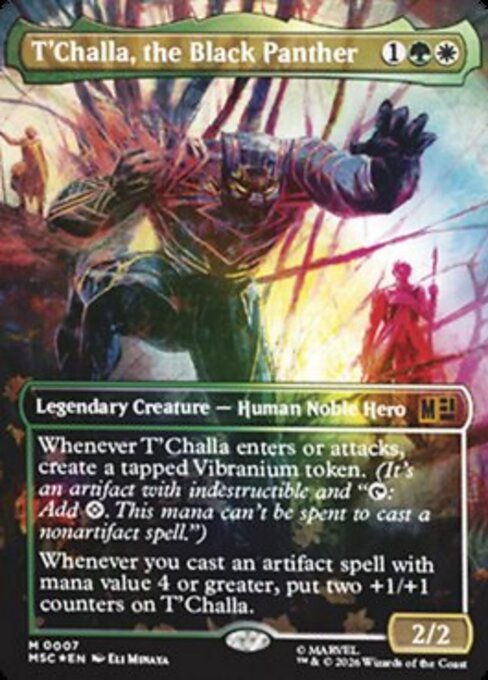
Snail likes to open with a question. Say a card is powerful, meshes with how a deck works, and shores up a real weak spot. When is putting it in still the wrong call? Casual Commander gives that question teeth, because a casual deck is one you have chosen to keep short of fully optimal on purpose. There are always stronger cards you could run. So the interesting cases are the good cards that quietly cost you the thing you actually enjoy, or that work against what the deck is really about. The stock Wakanda precon runs several plans at once, carrying artifact, Equipment, monarch, token, and alternate-commander pieces together, and reviewers have called the printed list a little disjointed. This walkthrough picks one of its paths, T'Challa spinning up indestructible Vibranium tokens and growing on big artifact spells, and reads the strong cards that pull against that chosen plan.
Snail asks a tricky question: a card can be strong and still be the wrong pick. Why? Because a casual deck is meant to be about something, and some powerful cards skip the fun part or work against the plan. The stock Wakanda deck actually does a few different things at once. This page picks the T'Challa plan, making shiny indestructible tokens and stacking +1/+1 counters, and cuts the cards that fight that one plan.
T'Challa, the Black Panther
{1}{G}{W}

Shuri, the Black Panther
{G}{W}

Storm, Queen of Wakanda
alt
The core ideaThe cost that lives off the stat line
Snail's examples all share a shape. A card looks like a slam dunk, then it shortcuts past the part of the deck that made it fun, or it drags a hidden cost the card text never mentions. In his video, Monument to Endurance turns a cycling deck's rich tutoring puzzle into a plain do-a-thing-get-a-card engine, and Thousand-Year Storm erases value and mana as concepts in a deck built to grind out two-for-ones. Both cards read as pure upgrades and both quietly flatten the deck. The lesson carries straight onto Wakanda. Judge each card by its stat line and you keep every strong include. Judge it by what it does to T'Challa's Vibranium and counters plan, and by what it costs you at the table, and a few of them stop looking so obvious.
Optimizing is fine. The move is to optimize for the Vibranium and counters identity rather than for raw power that ignores it.
Snail's trick is to look past how strong a card is. A card can be great on paper and still hurt the deck, either by skipping the fun part or by having a hidden cost the card does not tell you about. For Wakanda, the test is simple: does this card help the Vibranium and counters plan, or does it just add generic power that pulls the deck off its own game?
Swap 1, the headlineThe card whose real price is the target it paints
 →
→
Coveted Jewel → Batterskull
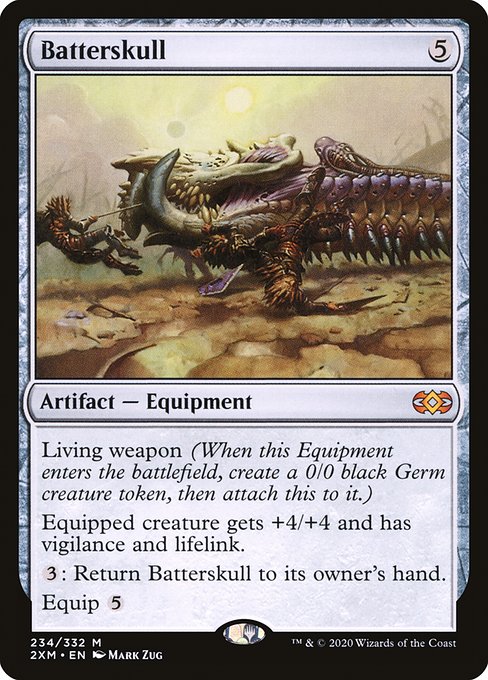
Coveted Jewel is the clearest case of the whole idea. By raw rate it is excellent: it draws three when it enters, taps for three mana, and even triggers T'Challa when you cast it at six mana. The case against it has nothing to do with synergy. Its real price stays off the stat line, since whenever one or more creatures an opponent controls attack you and go unblocked, that player takes the Jewel and draws three, no combat damage required. That hands an opponent your card advantage and gives the whole table a reason to point attacks your way. In a grindy Selesnya deck that wants to build its own board on its own clock, that is a liability the text never spells out. Batterskull does the honest version of the job, a recurring lifelink threat that protects you and closes games without begging the table to swing at you.
Coveted Jewel draws you three cards when it enters and makes mana, so it looks amazing. The catch: if an opponent attacks you with a creature and you do not block it, they take the Jewel and draw three, even without dealing damage, and it makes everyone want to attack you. That hidden cost is the point. Batterskull is a big lifelink threat that keeps you safe instead of painting a target on your back.
Swap 2, sharpen the synergyTrade steady ramp for a bigger counter payoff
 →
→
Sword of the Animist → Verdurous Gearhulk
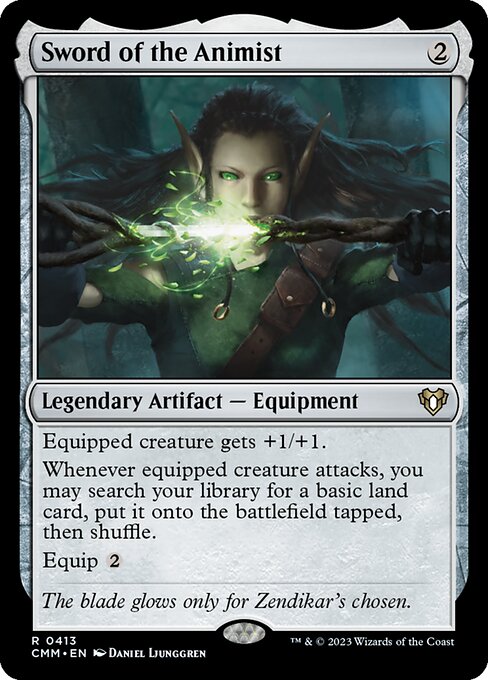
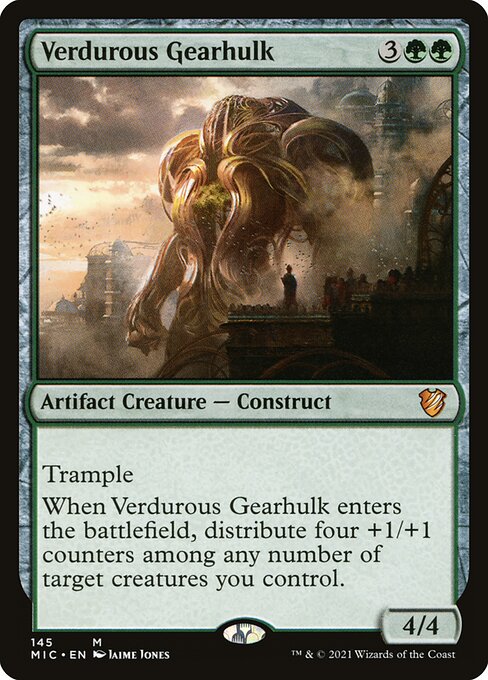
This one is a synergy-sharpening choice rather than a wrong-choice cut, since Sword of the Animist is genuinely on-theme. Sword is a two-mana artifact that fetches a land whenever the equipped creature attacks, and T'Challa wants to attack anyway, so it rewards the same swings with permanent ramp, and that ordinary mana pays for the creatures, interaction, and protection that Vibranium mana cannot cast. The knock is only that at two mana it never clears T'Challa's four-or-greater counter trigger. Verdurous Gearhulk pushes the counters harder. When it enters, it distributes four +1/+1 counters among any number of your creatures, which you can stack on the Panther, and because it is a five-mana artifact, casting it also triggers T'Challa for two more. Read the two as separate events. The commander's two counters come from casting the artifact spell, before the Gearhulk resolves, while the four distributed counters come from its enter ability once it is on the battlefield. A reanimation or blink effect would give you the four-counter distribution with no cast trigger at all. Snail's through-line still applies: pick the tool that deepens the deck's real game, here trading steady attack-ramp for an immediate counters payoff.
Sword of the Animist fetches lands and is on-theme, since T'Challa likes to attack, but it is small and never triggers the counters. Verdurous Gearhulk spreads four +1/+1 counters across your creatures when it enters, and because it is an artifact, casting it also gives T'Challa two more. Those are two separate things: the two counters come from casting it, the four come from its enter ability. It pushes the counters plan harder, which is what this deck wants.
Swap 3Cheap protection for the plan you care about
 →
→
Gilded Lotus → Reprieve
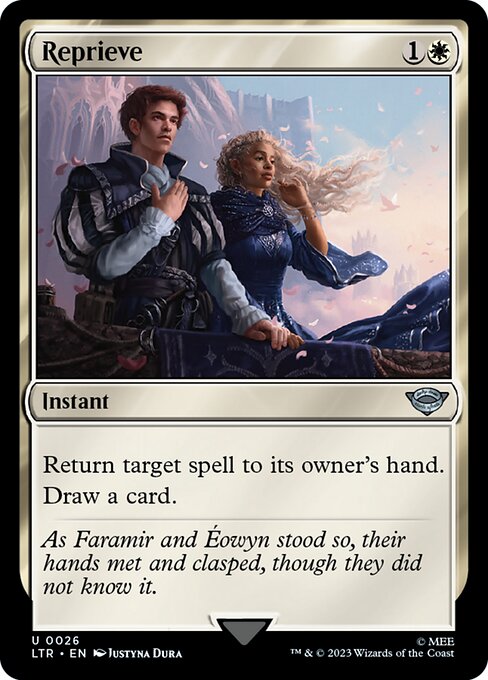
This is a package trade, not a card that fights the plan. Gilded Lotus is genuinely useful here: as a five-mana artifact it triggers T'Challa for two counters, taps for three mana of any color, casts the deck's nonartifact spells, and pays activated and equip costs, which matters because Vibranium mana carries a casting restriction and cannot do that. It also helps you rebuild once T'Challa gets expensive on commander tax. The real knock is only tempo, since five mana that mostly makes more mana is slow for where this deck wants to be by then. Reprieve trades that slow rock for cheap insurance, a two-mana instant that returns a removal spell to its owner's hand and replaces itself. It answers spells, not abilities or combat, so treat it as targeted cover for T'Challa. Draftsim recommends it as protection against expensive board wipes, where a Selesnya deck struggles to rebuild. So this swap exchanges ramp for interaction, and a full build should count its acceleration and its protection before committing to it.
Gilded Lotus does more than it looks: it triggers T'Challa, makes any color, and can cast your non-artifact spells, which the Vibranium tokens cannot. It is just slow at five mana. Reprieve is a cheap spell that saves a key card like T'Challa from removal, and it draws you a card too. You are trading a mana rock for a protection spell.
The through-lineOptimize for the vibe, then chase it
Snail is honest that putting weaker-looking cards in a deck runs against every deckbuilding instinct, and he is a self-described optimizer. His fix is to keep optimizing, only for something other than raw power. For Wakanda that something is the Vibranium and counters identity that is the whole reason to buy the box. Cut the strong card that paints a target, sharpen the merely-fine card into a real counters payoff, and fill the rest of the slots with cards that push the plan and guard the pieces. A win with this deck feels earned when it comes from its own hardware, so give it the tools that make the Vibranium engine the star and let the flashier options sit in someone else's deck.
The headline call is Coveted Jewel, a strong card whose real cost is the target it paints on you. The rest tighten the deck around the plan a T'Challa build wants to play.
Snail admits it feels weird to leave out strong cards. His answer is to still build the best deck, just the best version of THIS deck, rather than the most powerful pile of cards. Keep the Vibranium and counters plan front and center, cut the cards that fight it, and the wins feel earned because they come from the deck's own engine.
Sources. Principle from Salubrious Snail's video "When Good Cards Are the Wrong Choice" (owPWRYhY1VA), full transcript on file. Card text and images via Scryfall (Marvel Super Heroes Commander). Cut and add list from the Draftsim Wakanda Forever upgrade guide. Deck context on the Marvel rankings and Snail decks pages. This is the wrong-choice argument itself, worked on the actual precon, instead of a link to it.